
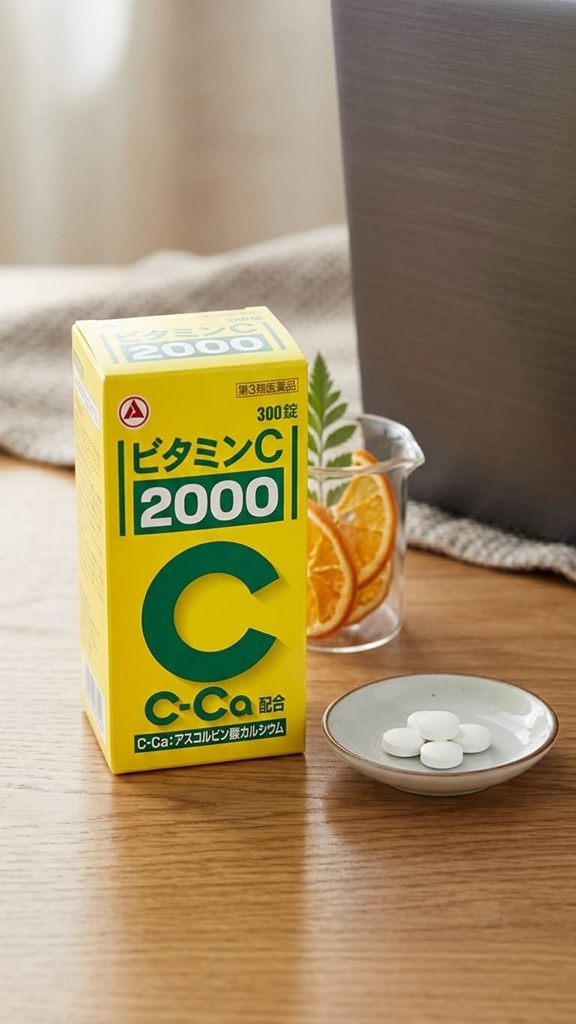
Vitamin C “2000” (formerly known as Vitamin C “Takeda”)
Original price was: 3,500.00৳ .3,290.00৳ Current price is: 3,290.00৳ .
Product Details
| Feature | Details | |
| Origin | Made in Japan by Alinamin Pharmaceutical Co., Ltd. | |
| Standard Size | 300pc | |
Description
Vitamin C “2000” (formerly known as Vitamin C “Takeda”), a Class 3 Japanese pharmaceutical product. It is formulated to provide a high daily dose of 2,000 mg of Vitamin C (ascorbic acid and calcium ascorbate), along with Vitamin B2 and calcium.
Key Benefits:
The product is primarily used for the following:
- Skin Health & Pigmentation Relief: Helps alleviate symptoms like age spots, freckles, and pigmentation caused by sunburn or rashes. It works by inhibiting melanin production and promoting collagen synthesis.
- Physical Fatigue & Supplementation: Replenishes Vitamin C during times of physical exhaustion, pregnancy, lactation, or when recovering from illness.
- Bleeding Prevention: Strengthens blood vessel walls to help prevent bleeding from the gums and nose.
Product Features:
- Composition: Contains 2,000 mg of Vitamin C and 68 mg of calcium per the maximum daily dose of 6 tablets (for ages 15+).
- Dietary Friendly: The tablets are sodium-free and sugar-free, making them suitable for those monitoring salt or sugar intake.
- Target Audience: Suitable for individuals aged 7 years and older.
General Dosage Information:
- Adults (15+): 1–3 tablets per dose, twice daily (maximum 6 tablets/day).
- Children (11–14): 1–2 tablets per dose, twice daily.
- Children (7–10): 1 tablet per dose, twice daily.
- Under 7: Not recommended.
Potential Side Effects:
While generally safe when taken as directed, some individuals may experience side effects, particularly if taken in high doses:
- Gastrointestinal Issues: Nausea, vomiting, stomach discomfort, bloating, stomach cramps, or diarrhea.
- Urinary Changes: Urine may turn yellow due to the inclusion of Vitamin B2 (Riboflavin butyrate); this is normal and not a cause for concern.
- High Dose Risks: Daily intake exceeding 2,000 mg may increase the risk of kidney stones, severe diarrhea, or headaches.
Related products
-
-
Sale!


Premium Iranian Saffron (Jafran)
Price range: 450.00৳ through 1,200.00৳Select options This product has multiple variants. The options may be chosen on the product page -


Pista Premium Dubai Chocolate Pistachio Kunafa
Price range: 550.00৳ through 1,050.00৳Select options This product has multiple variants. The options may be chosen on the product page